Choosing a Car Battery Is More Than Matching the Physical Size
A replacement battery needs to fit the vehicle physically and meet its electrical requirements. Choosing only by brand or approximate size can result in poor starting performance, installation problems or a battery that is not suited to the vehicle’s charging system.
The safest starting point is the vehicle manufacturer’s specification or the rating shown on the correctly specified original battery.
1. Confirm the Battery Voltage
Most passenger-car starting batteries use a 12-volt electrical system, but always confirm the vehicle requirement before replacement. Commercial vehicles and specialised equipment may use different system arrangements.
2. Check the Ah Capacity
Ampere-hours (Ah) indicate battery capacity. A higher Ah number does not automatically mean a battery is the correct replacement. The capacity should remain within the range suitable for the vehicle’s electrical and charging system.
Use the vehicle manufacturer’s recommendation when selecting the replacement capacity.
3. Understand CCA
Cold Cranking Amps (CCA) describe a battery’s ability to supply starting current under a defined low-temperature test condition. Engines with higher starting-current requirements generally need batteries with suitable CCA performance.
Do not replace a battery with one whose starting capability is below the vehicle manufacturer’s requirement.
4. Match the Physical Dimensions and Hold-Down
The battery must fit the tray correctly and be secured by the intended hold-down system. Check:
- Length, width and height
- Battery case or group size
- Base hold-down arrangement
- Clearance around the terminals and bonnet
A battery that is not secured correctly can move, vibrate or create a safety risk.
5. Check Terminal Position and Polarity
Two batteries can have similar dimensions while using different positive and negative terminal positions. Confirm the terminal layout before installation so the vehicle cables reach without stretching or crossing.
6. Consider the Vehicle Technology
Vehicles with start-stop systems or unusually high electrical loads may require a specific battery technology. Do not replace a specialised battery with a conventional type unless the vehicle manufacturer explicitly permits it.
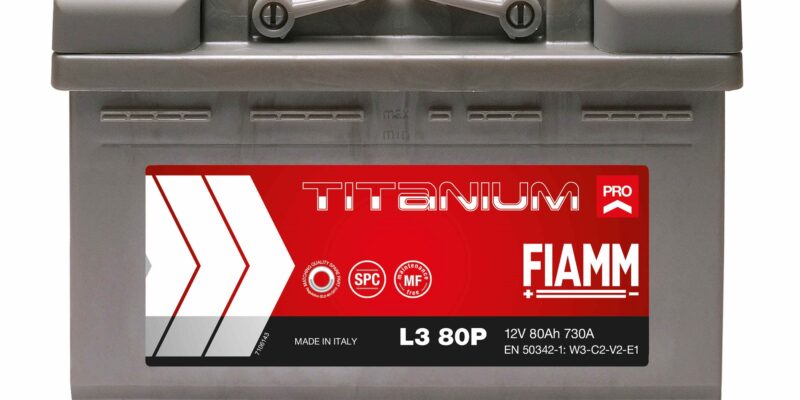
FIAMM Titanium Pro Batteries from INER-G
INER-G supplies FIAMM Titanium Pro automotive starting batteries in Lebanon. The correct model should be selected according to the vehicle’s required capacity, CCA, dimensions and terminal arrangement.
What Information Should You Provide When Asking for a Battery?
For faster battery selection, provide:
- Vehicle make, model and year
- Engine type or displacement where relevant
- Existing battery voltage and Ah rating
- CCA rating if shown
- Battery dimensions or case size
- Terminal position
- Whether the vehicle uses start-stop technology
Contact INER-G for Battery Selection Support »
Frequently Asked Questions
Can I install a battery with a higher Ah rating?
Not automatically. The replacement should remain appropriate for the vehicle’s charging system, battery tray and manufacturer requirements.
Is CCA the same as Ah?
No. Ah relates to capacity, while CCA is a measure of starting-current capability under a defined low-temperature test condition.
Can I choose a battery only by its dimensions?
No. Dimensions, voltage, capacity, starting performance, terminal layout and battery technology all need to be compatible with the vehicle.