
Coolant and Antifreeze Are Part of Generator Reliability
A diesel generator’s cooling system has to control engine temperature, protect metal surfaces and remain effective throughout the service interval. Choosing the correct coolant or antifreeze is therefore more than a question of freeze protection.
The first rule is simple: use a coolant technology and concentration that meet the engine manufacturer’s requirements. Product colour alone is not a reliable way to determine compatibility.
What Is the Difference Between Antifreeze and Coolant?
Antifreeze commonly refers to a concentrated glycol-based product that contains corrosion-inhibitor chemistry. It is normally mixed with suitable water at a concentration specified by the engine or coolant manufacturer.
Coolant is the working fluid circulating through the engine cooling system. It may be supplied as a ready-to-use premix or prepared from antifreeze concentrate and water.
Always check whether the product is a concentrate or a premixed coolant before adding it to the system.
Why Coolant Chemistry Matters
A suitable generator coolant should help provide:
- Heat transfer from the engine to the radiator
- Corrosion protection for metals in the cooling circuit
- Protection against freezing where required
- Boiling-point protection at elevated operating temperatures
- Compatibility with seals, hoses and other cooling-system materials
Different coolant formulations use different inhibitor technologies. Mixing incompatible products can reduce corrosion protection or create deposits. If the existing coolant chemistry is unknown, consult the engine manufacturer’s procedure before changing products.
Do Not Select Coolant by Colour Alone
Green, red, blue, orange and other colours are used by different manufacturers, but colour is not an industry-wide technical specification. Two products with the same colour can use different chemistry, while two differently coloured products may meet similar specifications.
Use the required standard, OEM specification and product technical data rather than colour as the selection criterion.
Water Quality and Concentration Are Important
When using a coolant concentrate, the quality of the dilution water can affect cooling-system performance. Minerals and contaminants in unsuitable water may contribute to scaling or deposits. Follow the coolant and engine manufacturer’s guidance for water quality and mixing concentration.
Too little or too much concentrate can also affect protection and heat-transfer performance. Do not assume that a stronger mixture is automatically better.
Check the Cooling System During Maintenance
Cooling-system maintenance should include inspection for leaks, hose condition, radiator condition and the correct coolant level. Where appropriate, coolant testing can help verify concentration and condition.
Never remove a pressurised cooling-system cap while the engine is hot. Follow the generator manufacturer’s safety and maintenance procedures.
Need Help Selecting a Generator Coolant?
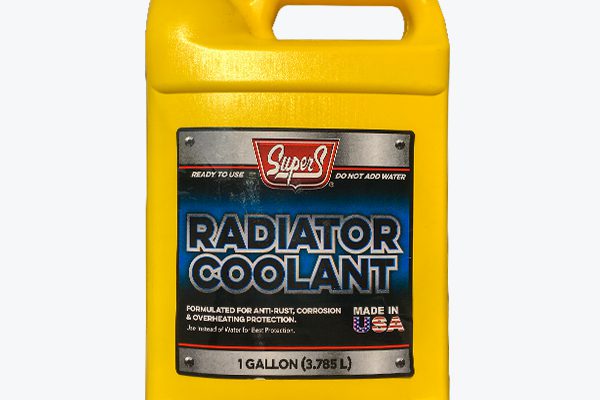
INER-G supplies coolants and antifreeze for power-generation, automotive and industrial applications. Products in the range include SUPER S Green 5% Radiator Coolant. To identify a suitable product, provide the engine make and model, the manufacturer’s coolant specification and information about the product currently in the system.
Visit our Power Generation sector page or contact INER-G for technical product support.
Related guide: How to Choose the Right Engine Oil for a Diesel Generator.
Contact INER-G for Generator Coolant Support »
Prepared by the INER-G Technical Team. Product selection should always be verified against the vehicle, engine or equipment manufacturer’s current requirements and the product technical data.